
Hersteller von Bonded NdFeB-Magneten & maßgeschneiderte Lösungen
Partner werden Sie mit einem führenden Hersteller von NdFeB-Magneten mit Bondverbindung, der sich auf maßgefertigte Spritzguss- und Kompressionsguss-Neodym-Magneten spezialisiert hat. Unsere Polymermagnete sind für hochpräzise Mikromotoren, Automobil-Sensoren und Büroautomatisierung konzipiert und bieten komplizierte 3D-Geometrien, exakte Abmessungen bis zu ±0,02 mm (Spritzguss) sowie flexible Mehrpolmagnetisierung ohne zusätzliche Bearbeitung.
Sintered vs Bonded NdFeB Magnets: Which One Fits Your Design?
Sintered and bonded NdFeB magnets solve different problems. Sintered magnets deliver the highest magnetic energy for a given volume and the highest operating temperatures. Bonded magnets, made by injection molding or compression molding, give you near net shape parts, tight as-molded tolerances, thin walls and multi-pole magnetization without secondary machining. The table below compares both bonded processes with sintered NdFeB on the points that decide most material choices. If your drawing sits between two columns, send it to our engineers and we will recommend the better fit.
| Item | Injection-Molded Bonded NdFeB | Compression-Molded Bonded NdFeB | Sintered NdFeB |
|---|---|---|---|
| Max. Energy Product (BH)max | 5–8 MGOe | 3.0–13.0 MGOe24–104 kJ/m³, depending on SYM grade | 27–56 MGOe215–446 kJ/m³, grades N30 to N56 |
| Dimensionale Toleranz | ±0.02 mmas-molded, no secondary machining | ±0.03 to ±0.05 mm | ±0.05 mm or tighterafter grinding |
| Magnet Powder | Isotropic rapid-quenched NdFeB powder | Isotropic rapid-quenched NdFeB powder | Anisotropic NdFeB alloy |
| Complex Shape and Thin Wall | Excellent, ultra-thin walls and intricate profiles | Good, limited thin-wall capability | Poor, needs post machining |
| Multi-Pole Magnetization | Very flexible, multi-pole on inner or outer diameter | Flexible, multi-pole available | Possible, but at higher cost |
| Binder Material | PA6, PA12, PPS | Epoxy resin | No polymer binder |
| Max. Operating Temperature | Up to 120°C (PA6, PA12)Up to 180°C (PPS grade) | 150 to 180°Cdepending on SYM grade | 80 to 230°CN 80, M 100, H 120, SH 150, UH 180, EH 200, AH 230°C (at L/D = 0.7) |
| Korrosionsbeständigkeit | Good, protected by the polymer matrix | Good, protected by the epoxy binder | Coating requiredfor example Ni-Cu-Ni or epoxy |
| Typical Applications | Micro BLDC rotors, encoders, position sensors, OA motors | Small high-density sensor magnets, compact rotor rings | High-torque motors, speakers, magnetic separators |
Compression-molded values follow the SYM grade table below. Sintered values follow the N to AH grade series. Final properties depend on grade, shape and magnetization direction.
Bonded NdFeB Magnet Grades: Compression-Molded Properties
Compression-molded bonded NdFeB magnets are made from isotropic rapid-quenched NdFeB powder mixed with an epoxy binder and pressed to shape. The SYM series below covers (BH)max from 3 to 13 MGOe, with maximum operating temperatures of 150 to 180°C depending on grade. Click any grade name to add it to the inquiry form, then tell us your shape, dimensions and magnetization requirements.
Click a grade name to add it to your inquiry.
| Note | |||||||||||
|---|---|---|---|---|---|---|---|---|---|---|---|
| Residual Induction, BrmT (kGs) | 300–400(3.0–4.0) | 400–500(4.0–5.0) | 500–600(5.0–6.0) | 600–650(6.0–6.5) | 630–680(6.3–6.8) | 620–680(6.2–6.8) | 680–730(6.8–7.3) | 700–750(7.0–7.5) | 720–770(7.2–7.7) | 760–810(7.6–8.1) | 780–830(7.8–8.3) |
| Coercive Force, HcbkA/m (kOe) | 240–320(3.0–4.0) | 240–320(3.0–4.0) | 320–400(4.0–5.0) | 360–440(4.5–5.5) | 400–480(5.0–6.0) | 400–480(5.0–6.0) | 400–480(5.0–6.0) | 440–520(5.5–6.5) | 440–520(5.5–6.5) | 400–480(5.0–6.0) | 400–480(5.0–6.0) |
| Intrinsic Coercive Force, HcjkA/m (kOe) | 480–640(6.0–8.0) | 560–720(7.0–9.0) | 560–720(7.0–9.0) | 640–800(8.0–10.0) | 640–800(8.0–10.0) | 880–1120(11.0–14.0) | 640–800(8.0–10.0) | 640–800(8.0–10.0) | 720–800(9.0–10.0) | 480–640(6.0–8.0) | 480–640(6.0–8.0) |
| Max. Energy Product, (BH)maxkJ/m³ (MGOe) | 24–32(3.0–4.0) | 32–44(4.0–5.5) | 52–60(6.5–7.5) | 60–68(7.5–8.5) | 68–76(8.5–9.5) | 68–76(8.5–9.5) | 76–84(9.5–10.5) | 80–88(10.0–11.0) | 88–96(11.0–12.0) | 88–96(11.0–12.0) | 88–104(11.0–13.0) |
| Recoil Permeability, μrec | 1.2 | 1.2 | 1.2 | 1.2 | 1.2 | 1.2 | 1.2 | 1.2 | 1.2 | 1.2 | 1.2 |
| Avg. Reversible Temp. Coefficient%/°C | -0.11 | -0.11 | -0.11 | -0.11 | -0.11 | -0.10 | -0.10 | -0.10 | -0.10 | -0.12 | -0.12 |
| Curie Temperature, Tc°C | 300 | 300 | 300 | 300 | 350 | 350 | 350 | 350 | 350 | 320 | 320 |
| Max. Operating Temperature°C | 160 | 160 | 160 | 160 | 160 | 180 | 160 | 160 | 160 | 150 | 150 |
| Magnetizing FieldkA/m (kOe) | >1600(>20) | >1600(>20) | >1600(>20) | >1600(>20) | >1600(>20) | >3000(>25) | >1600(>20) | >1600(>20) | >1600(>20) | >1600(>20) | >1600(>20) |
| Density, ρg/cm³ | 4.5–5.0 | 5.0–5.5 | 5.5–6.0 | 5.8–6.0 | 5.8–6.1 | 5.8–6.1 | 5.8–6.1 | 6.0–6.3 | 6.0–6.3 | 6.0–6.3 | 6.1–6.4 |
| HardnessHRB | 40–45 | 40–45 | 40–45 | 35–38 | 35–38 | 35–38 | 35–38 | 35–38 | 35–38 | 35–38 | 35–38 |
All values are nominal ranges for isotropic compression-molded bonded NdFeB. Final properties depend on grade, part geometry and magnetization.
Vielen Dank!
Ihr Anliegen wurde gesendet. Einer unserer Magnetingenieure wird innerhalb von 24 Stunden auf Ihre E-Mail antworten.
Injektionsgeformte Bonded NdFeB-Magneten
Komplexer Geometrie und integrierte Montagelösungen
Verdrängungsmischungen aus NdFeB-Magneten werden hergestellt, indem magnetisches Pulver mit thermoplastischen Bindemitteln (wie Nylon oder PPS) vermischt wird. Dieser Prozess ermöglicht die Herstellung komplexer Formen, mehrpolige Magnetisierung und direkte Überformung auf Wellen oder Gehäusen mit engen Maßtoleranzen, wodurch die Notwendigkeit für eine sekundäre Bearbeitung entfällt.
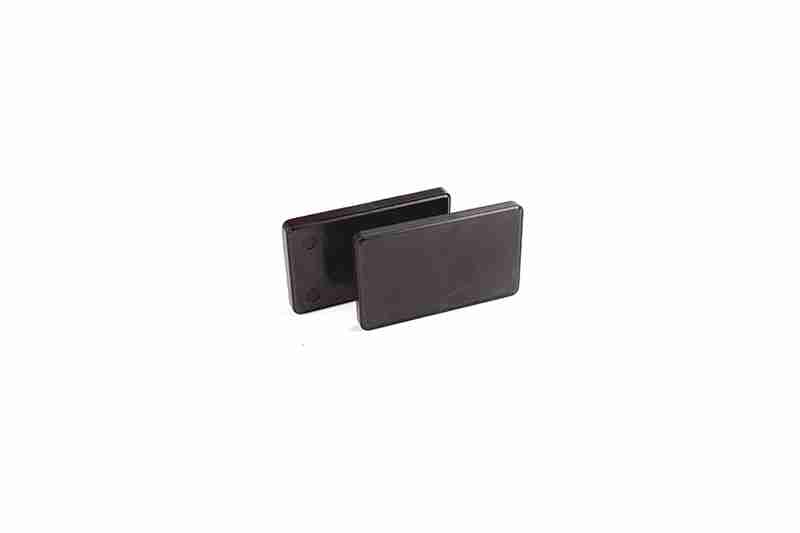
Blockmagnet
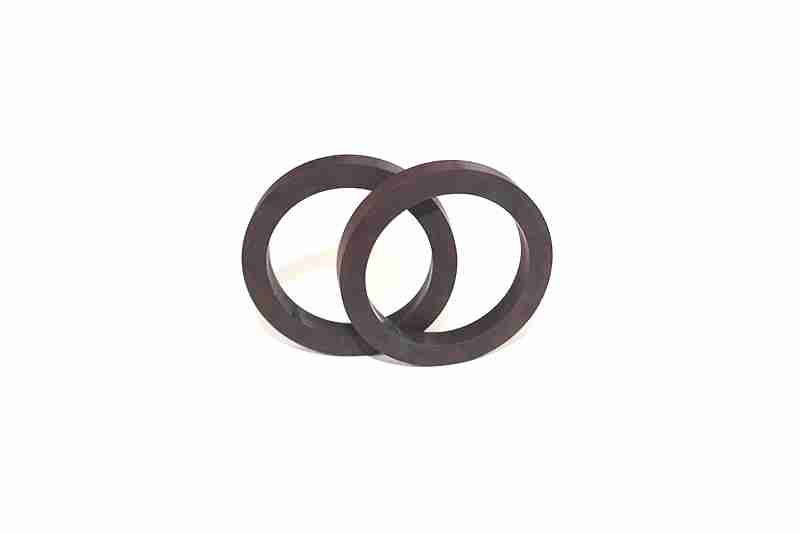
Ringmagnet
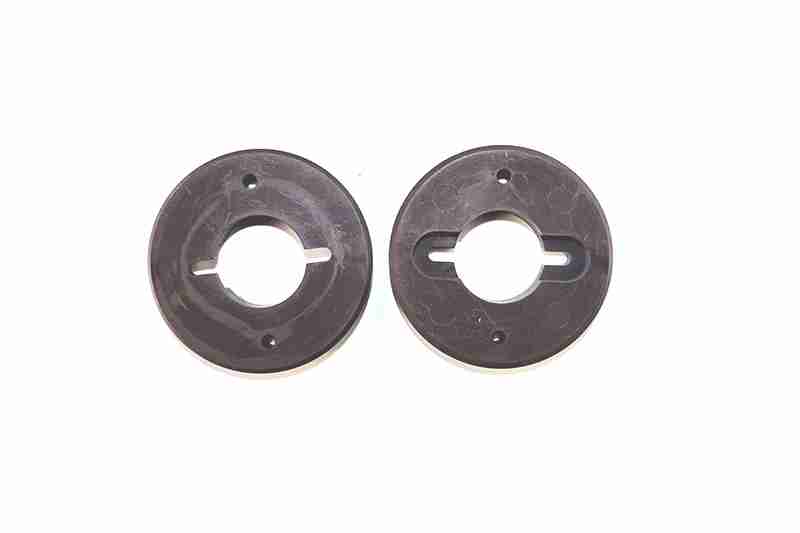
Unregelmäßiger Magnet
Kompressionsgeformte Bonded NdFeB-Magneten
Hohe magnetische Energie und präzise Ringoptionen mit dünnem Wandaufbau
Kompressionsgeformte, verklebte NdFeB-Magneten kombinieren isotropen Neodympulver mit Epoxidharz, um eine höhere magnetische Dichte und Leistung zu erreichen als bei Spritzgussoptionen. Ideal für präzise Mikromotoren, Sensoren und Anwendungen mit dünnwandigen Ringen bieten sie hervorragende mechanische Festigkeit und gleichmäßige magnetische Eigenschaften.
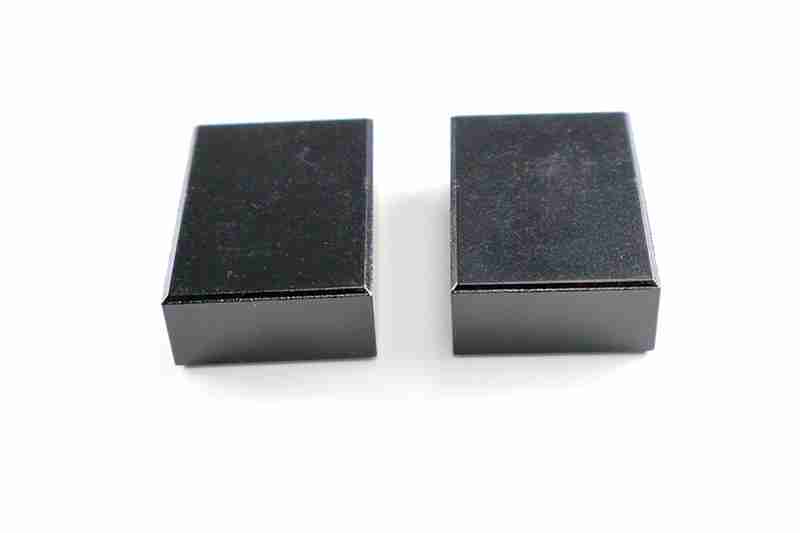
Blockmagnet
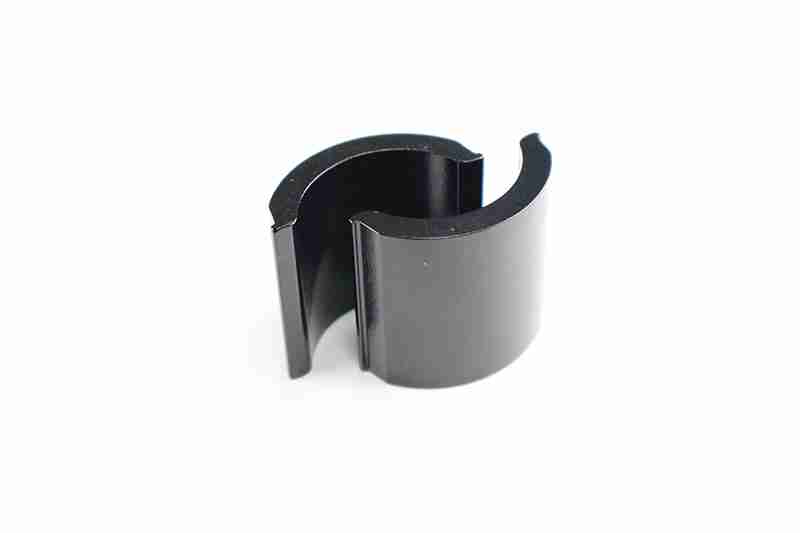
Arc Magnet
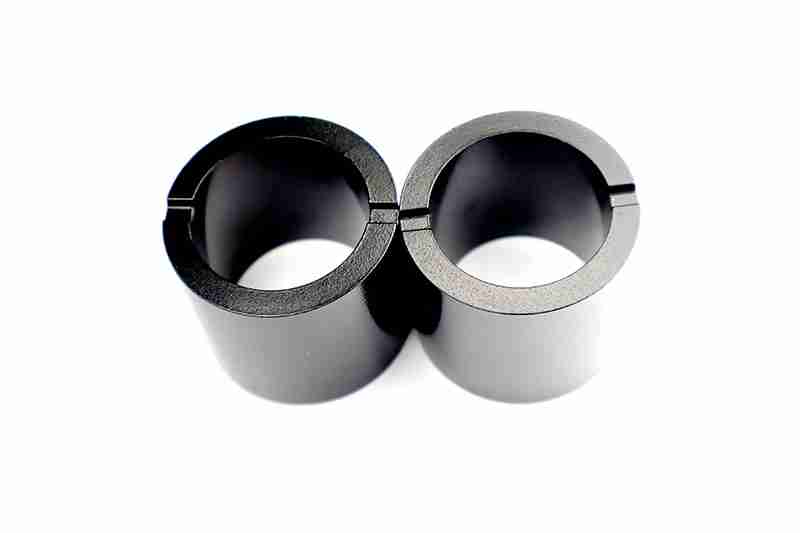
Ringmagnet
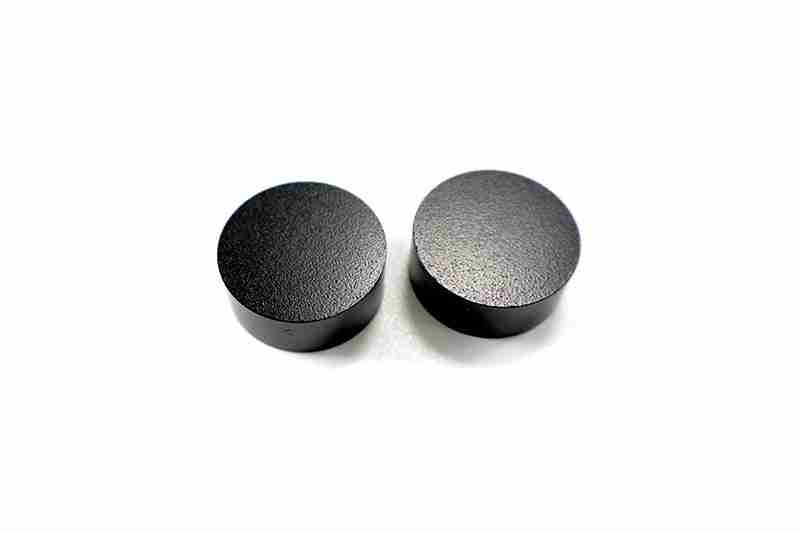
Scheibenmagnet
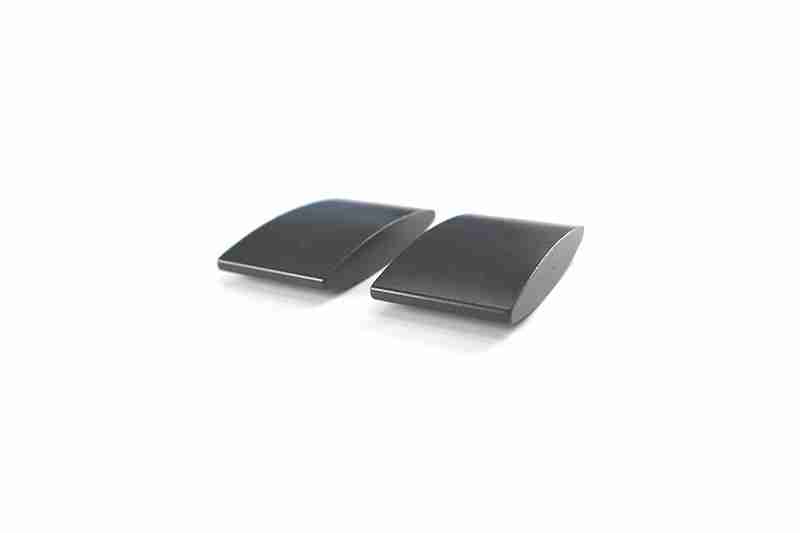
Unregelmäßiger Magnet
Benötigen Sie maßgefertigte Proben?
Allgemeine Fragen zu Bonded NdFeB-Magneten
Technische und Engineering-FAQs zu präzisionsgeformten Neodym-Magneten
Frage 1: Was ist der Hauptunterschied zwischen verklebten NdFeB- und gesinterten NdFeB-Magneten?
Bonded NdFeB magnets are typically manufactured by mixing NdFeB magnetic powders with polymer binders, such as epoxy, nylon, or PPS, followed by compression or injection molding. Although they generally offer lower magnetic energy products than sintered NdFeB magnets due to their lower magnetic material content, they provide greater design flexibility, allowing for complex 3D shapes, multi-pole magnetization, good dimensional accuracy, and better resistance to chipping during handling and assembly.
Frage 2: Welche Vorteile haben Spritzguss-NDFeB-Magneten im Vergleich zu Pressguss-NDFeB-Magneten?
Compression molded NdFeB magnets typically contain a higher magnetic powder volume fraction (up to approximately 80%), allowing them to achieve higher magnetic properties, with (BH)max values potentially reaching 10–12 MGOe. Injection molded NdFeB magnets generally have lower magnetic properties (often around 5–8 MGOe) but offer greater design flexibility, enabling complex 3D geometries, thin-wall structures, multi-pole magnetization, and direct integration with shafts or other components through insert molding.
Frage 3: Welche maximale Betriebstemperatur können verbundene NdFeB-Magneten ertragen?
The maximum operating temperature of bonded NdFeB magnets depends on both the polymer binder and the magnetic grade used. Epoxy-bonded compression molded magnets typically operate at around 100–150°C, while injection molded grades using high-temperature PPS binders can reach up to 180°C. However, the actual operating limit also depends on the magnet’s dimensions, magnetic properties, and exposure time, so the specific grade should always be evaluated against the application’s thermal requirements.
Frage 4: Erfordern gebundene NdFeB-Magneten eine Oberflächenbeschichtung oder -beschichtung?
Frage 5: Können gebundene NdFeB-Magneten in mehrpoligen Konfigurationen magnetisiert werden?
Yes, isotropic bonded NdFeB magnets can be magnetized in multiple directions and pole configurations after molding because their randomly oriented magnetic particles do not have a fixed preferred magnetization direction. Common configurations include 4-pole, 8-pole, 16-pole, and 32-pole radial magnetization on the inner or outer circumferential surfaces, making them particularly suitable for BLDC motor rotors, magnetic encoders, and precision position sensors, although specialized magnetizing fixtures are required to achieve the desired pole pattern.
Frage 6: Welche Maßtoleranzen lassen sich bei verklebten NdFeB-Magneten ohne Bearbeitung erreichen?
Bonded NdFeB magnets can achieve good dimensional accuracy directly from the mold, reducing the need for secondary machining. The achievable tolerances depend on the molding process, part geometry, dimensions, and tooling precision, with injection molding offering particular advantages for producing complex components with consistent dimensions. For critical dimensions, tighter tolerances should be confirmed through tooling evaluation and sample testing.
Frage 7: Was ist das Einsteckformen (Überformen) von verklebten Neodym-Magneten?
Insert molding is a manufacturing process in which bonded NdFeB material is injected directly around a pre-positioned metal shaft, bushing, or other structural component inside a mold, creating an integrated magnetic assembly without requiring separate adhesive bonding. This process reduces manual assembly steps and production costs while improving structural consistency and positioning accuracy, making it particularly suitable for motor rotors and other precision magnetic components.
Frage 8: Welche Details sollten ich angeben, um ein schnelles Angebot für maßgefertigte NdFeB-Magneten zu erhalten?
To receive an accurate quotation and manufacturing feasibility assessment as quickly as possible, please provide the following information:
2D/3D Drawings: STEP, IGES, or PDF files showing dimensions, tolerances, and critical features.
Molding Requirements: Preferred process, such as epoxy compression molding or nylon/PPS injection molding, if known.
Magnetization Specifications: Required pole count, magnetization direction, and target magnetic flux or surface field, if available.
Application & Operating Environment: Intended application, maximum operating temperature, exposure to moisture or chemicals, and surface protection requirements.
Order Quantity: Initial sample quantity and estimated annual demand to help evaluate tooling costs and production options.
If drawings or technical specifications are not yet available, a reference sample or preliminary design description can also help us begin the feasibility assessment.
Haben Sie die gesuchte Antwort nicht gefunden?
Sie benötigen einzigartige Formdesigns, Anforderungen an mehrpolige Magnetisierung oder Fragen zur Einsteckformgebung? Kontaktieren Sie unser technisches Team noch heute, um kostenlose DFM-Analysen (Design for Manufacturability), magnetische FEM-Simulationen und eine Antwort innerhalb von 24 Stunden zu erhalten.