
Fabricante de ímãs NdFeB selados e soluções sob medida
Colabore com um fabricante líder de ímãs NdFeB fundidos, especializado em ímãs de neodímio moldados por injeção e compressão personalizados. Projetados para micromotores de alta precisão, sensores automotivos e automação de escritórios, nossos ímãs fundidos com polímero oferecem geometrias 3D complexas, tolerâncias apertadas desde a moldagem até ±0,02 mm (moldados por injeção) e opções flexíveis de magnetização multipolar sem processamento secundário.
Sintered vs Bonded NdFeB Magnets: Which One Fits Your Design?
Sintered and bonded NdFeB magnets solve different problems. Sintered magnets deliver the highest magnetic energy for a given volume and the highest operating temperatures. Bonded magnets, made by injection molding or compression molding, give you near net shape parts, tight as-molded tolerances, thin walls and multi-pole magnetization without secondary machining. The table below compares both bonded processes with sintered NdFeB on the points that decide most material choices. If your drawing sits between two columns, send it to our engineers and we will recommend the better fit.
| Item | Injection-Molded Bonded NdFeB | Compression-Molded Bonded NdFeB | NdFeB sinterizado |
|---|---|---|---|
| Max. Energy Product (BH)max | 5–8 MGOe | 3.0–13.0 MGOe24–104 kJ/m³, depending on SYM grade | 27–56 MGOe215–446 kJ/m³, grades N30 to N56 |
| Tolérance dimensionnelle | ±0.02 mmas-molded, no secondary machining | ±0.03 to ±0.05 mm | ±0.05 mm or tighterafter grinding |
| Magnet Powder | Isotropic rapid-quenched NdFeB powder | Isotropic rapid-quenched NdFeB powder | Anisotropic NdFeB alloy |
| Complex Shape and Thin Wall | Excellent, ultra-thin walls and intricate profiles | Good, limited thin-wall capability | Poor, needs post machining |
| Multi-Pole Magnetization | Very flexible, multi-pole on inner or outer diameter | Flexible, multi-pole available | Possible, but at higher cost |
| Binder Material | PA6, PA12, PPS | Epoxy resin | No polymer binder |
| Max. Operating Temperature | Up to 120°C (PA6, PA12)Up to 180°C (PPS grade) | 150 to 180°Cdepending on SYM grade | 80 to 230°CN 80, M 100, H 120, SH 150, UH 180, EH 200, AH 230°C (at L/D = 0.7) |
| Resistência à corrosão | Good, protected by the polymer matrix | Good, protected by the epoxy binder | Coating requiredfor example Ni-Cu-Ni or epoxy |
| Typical Applications | Micro BLDC rotors, encoders, position sensors, OA motors | Small high-density sensor magnets, compact rotor rings | High-torque motors, speakers, magnetic separators |
Compression-molded values follow the SYM grade table below. Sintered values follow the N to AH grade series. Final properties depend on grade, shape and magnetization direction.
Bonded NdFeB Magnet Grades: Compression-Molded Properties
Compression-molded bonded NdFeB magnets are made from isotropic rapid-quenched NdFeB powder mixed with an epoxy binder and pressed to shape. The SYM series below covers (BH)max from 3 to 13 MGOe, with maximum operating temperatures of 150 to 180°C depending on grade. Click any grade name to add it to the inquiry form, then tell us your shape, dimensions and magnetization requirements.
Click a grade name to add it to your inquiry.
| Nível | |||||||||||
|---|---|---|---|---|---|---|---|---|---|---|---|
| Residual Induction, BrmT (kGs) | 300–400(3.0–4.0) | 400–500(4.0–5.0) | 500–600(5.0–6.0) | 600–650(6.0–6.5) | 630–680(6.3–6.8) | 620–680(6.2–6.8) | 680–730(6.8–7.3) | 700–750(7.0–7.5) | 720–770(7.2–7.7) | 760–810(7.6–8.1) | 780–830(7.8–8.3) |
| Coercive Force, HcbkA/m (kOe) | 240–320(3.0–4.0) | 240–320(3.0–4.0) | 320–400(4.0–5.0) | 360–440(4.5–5.5) | 400–480(5.0–6.0) | 400–480(5.0–6.0) | 400–480(5.0–6.0) | 440–520(5.5–6.5) | 440–520(5.5–6.5) | 400–480(5.0–6.0) | 400–480(5.0–6.0) |
| Intrinsic Coercive Force, HcjkA/m (kOe) | 480–640(6.0–8.0) | 560–720(7.0–9.0) | 560–720(7.0–9.0) | 640–800(8.0–10.0) | 640–800(8.0–10.0) | 880–1120(11.0–14.0) | 640–800(8.0–10.0) | 640–800(8.0–10.0) | 720–800(9.0–10.0) | 480–640(6.0–8.0) | 480–640(6.0–8.0) |
| Max. Energy Product, (BH)maxkJ/m³ (MGOe) | 24–32(3.0–4.0) | 32–44(4.0–5.5) | 52–60(6.5–7.5) | 60–68(7.5–8.5) | 68–76(8.5–9.5) | 68–76(8.5–9.5) | 76–84(9.5–10.5) | 80–88(10.0–11.0) | 88–96(11.0–12.0) | 88–96(11.0–12.0) | 88–104(11.0–13.0) |
| Recoil Permeability, μrec | 1.2 | 1.2 | 1.2 | 1.2 | 1.2 | 1.2 | 1.2 | 1.2 | 1.2 | 1.2 | 1.2 |
| Avg. Reversible Temp. Coefficient%/°C | -0.11 | -0.11 | -0.11 | -0.11 | -0.11 | -0.10 | -0.10 | -0.10 | -0.10 | -0.12 | -0.12 |
| Curie Temperature, Tc°C | 300 | 300 | 300 | 300 | 350 | 350 | 350 | 350 | 350 | 320 | 320 |
| Max. Operating Temperature°C | 160 | 160 | 160 | 160 | 160 | 180 | 160 | 160 | 160 | 150 | 150 |
| Magnetizing FieldkA/m (kOe) | >1600(>20) | >1600(>20) | >1600(>20) | >1600(>20) | >1600(>20) | >3000(>25) | >1600(>20) | >1600(>20) | >1600(>20) | >1600(>20) | >1600(>20) |
| Density, ρg/cm³ | 4.5–5.0 | 5.0–5.5 | 5.5–6.0 | 5.8–6.0 | 5.8–6.1 | 5.8–6.1 | 5.8–6.1 | 6.0–6.3 | 6.0–6.3 | 6.0–6.3 | 6.1–6.4 |
| HardnessHRB | 40–45 | 40–45 | 40–45 | 35–38 | 35–38 | 35–38 | 35–38 | 35–38 | 35–38 | 35–38 | 35–38 |
All values are nominal ranges for isotropic compression-molded bonded NdFeB. Final properties depend on grade, part geometry and magnetization.
Obrigado!
O seu pedido foi enviado. Um dos nossos engenheiros de magnetos responderá ao seu e-mail dentro de 24 horas.
Imãs NdFeB moldados por injeção
Geometrias Complexas e Soluções de Montagem Integrada
Os imãs NdFeB moldados por injeção são fabricados através da mistura de pó magnético com ligantes termoplásticos (como nylon ou PPS). Este processo permite formas complexas, magnetização multipolar e sobremoldagem direta sobre eixos ou alojamentos com tolerâncias dimensionais apertadas, eliminando a necessidade de usinagem secundária.
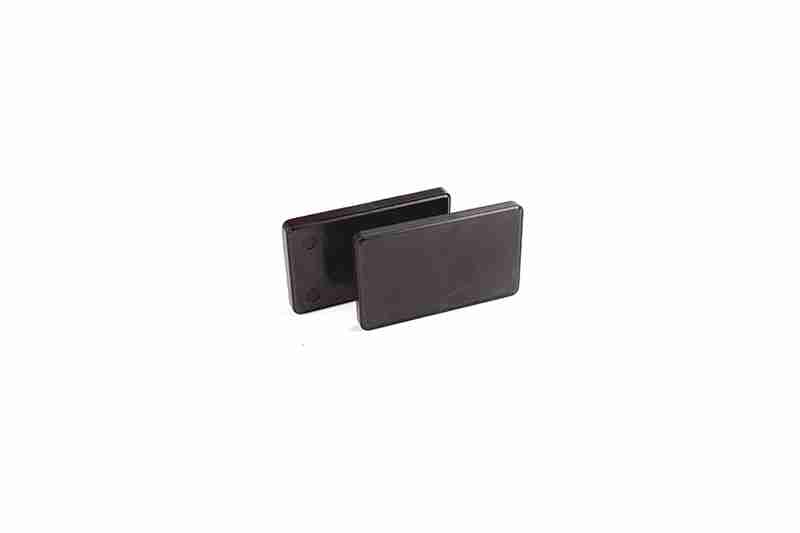
Bloco magnético
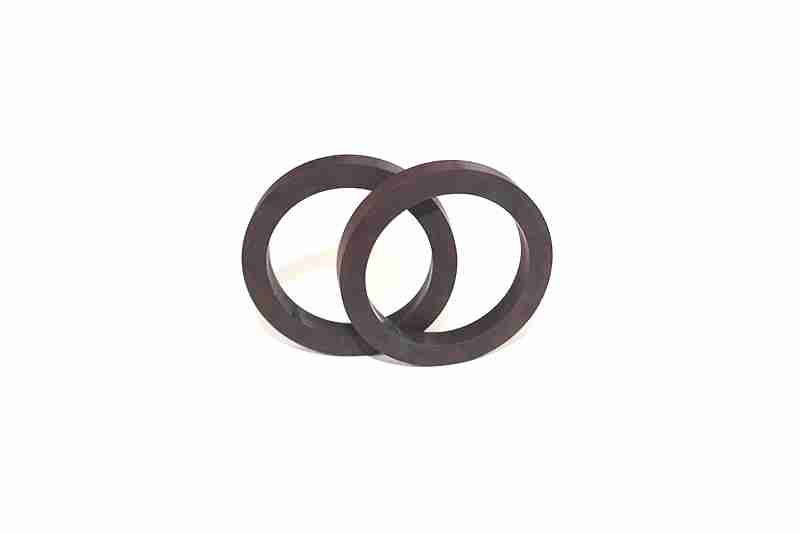
Anel com magnete
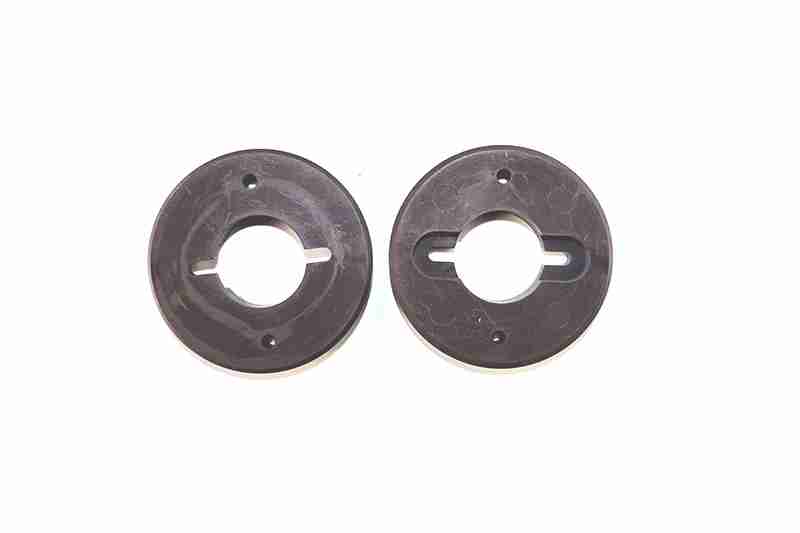
Magneto irregular
Magnets NdFeB moldados e ligados por compressão
Opções de anéis de parede fina com alta energia magnética e precisão
Os ímãs NdFeB moldados por compressão combinam o pó de neodímio isotrópico com resina epóxi para obter uma densidade magnética e um desempenho superiores às opções de moldagem por injeção. Ideais para micromotores de precisão, sensores e aplicações de anéis de paredes finas, oferecem excelente resistência mecânica e propriedades magnéticas uniformes.
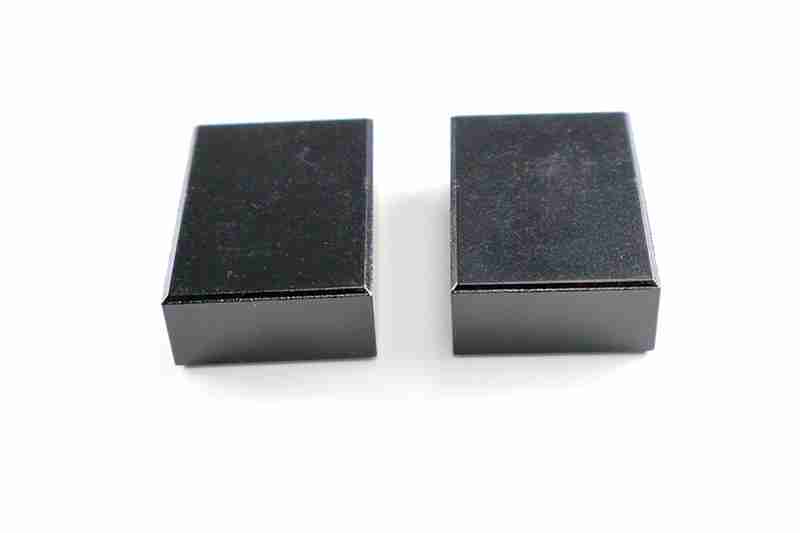
Bloco magnético
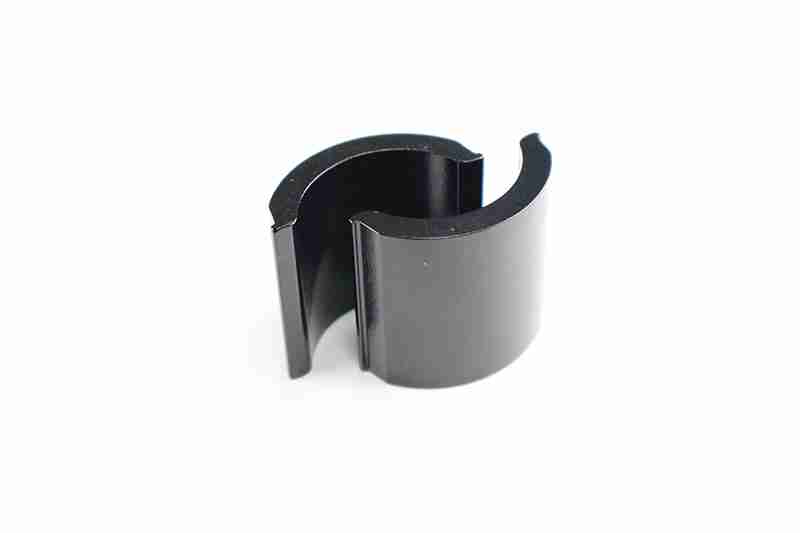
Arc Magnet
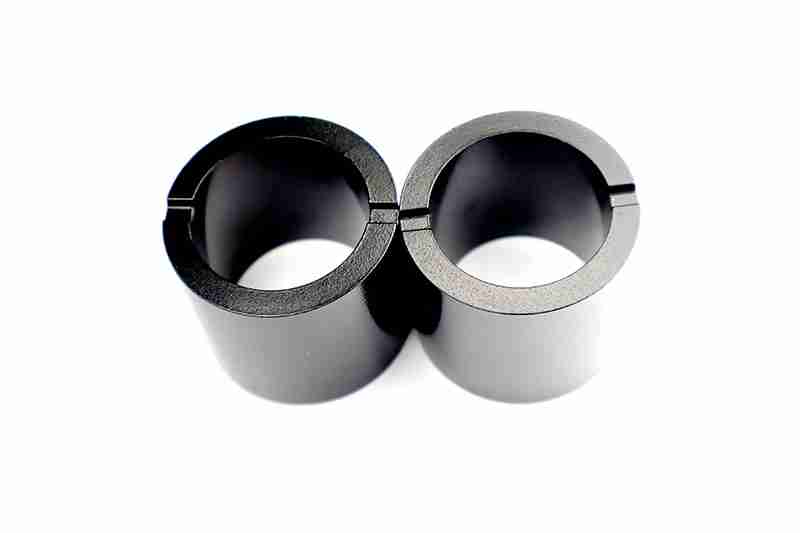
Anel com magnete
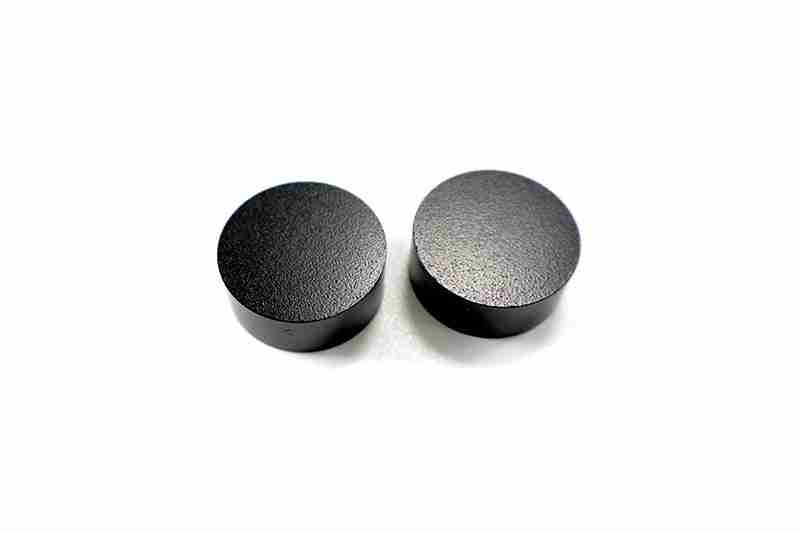
Disco magnético
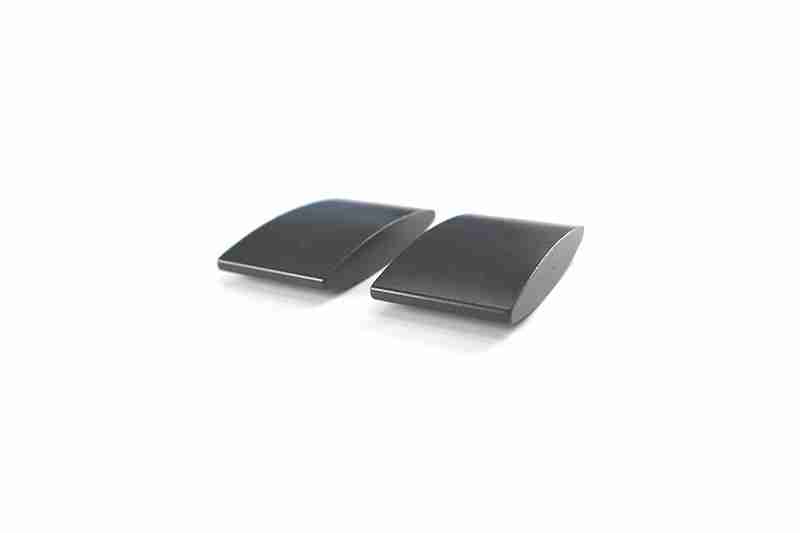
Magneto irregular
Necessita amostras personalizadas?
Perguntas frequentes sobre os ímãs NdFeB ligados
FAQs técnicas e de engenharia para imãs de neodímio moldados com precisão
Q1: Qual é a principal diferença entre os ímãs NdFeB ligados e os ímãs NdFeB sinterizados?
Bonded NdFeB magnets are typically manufactured by mixing NdFeB magnetic powders with polymer binders, such as epoxy, nylon, or PPS, followed by compression or injection molding. Although they generally offer lower magnetic energy products than sintered NdFeB magnets due to their lower magnetic material content, they provide greater design flexibility, allowing for complex 3D shapes, multi-pole magnetization, good dimensional accuracy, and better resistance to chipping during handling and assembly.
Q2: Quais são as principais vantagens dos imãs NdFeB moldados por injeção em comparação com os imãs NdFeB moldados por compressão?
Compression molded NdFeB magnets typically contain a higher magnetic powder volume fraction (up to approximately 80%), allowing them to achieve higher magnetic properties, with (BH)max values potentially reaching 10–12 MGOe. Injection molded NdFeB magnets generally have lower magnetic properties (often around 5–8 MGOe) but offer greater design flexibility, enabling complex 3D geometries, thin-wall structures, multi-pole magnetization, and direct integration with shafts or other components through insert molding.
Q3: Qual a temperatura máxima de operação que os ímãs NdFeB ligados podem suportar?
The maximum operating temperature of bonded NdFeB magnets depends on both the polymer binder and the magnetic grade used. Epoxy-bonded compression molded magnets typically operate at around 100–150°C, while injection molded grades using high-temperature PPS binders can reach up to 180°C. However, the actual operating limit also depends on the magnet’s dimensions, magnetic properties, and exposure time, so the specific grade should always be evaluated against the application’s thermal requirements.
Q4: Os ímãs NdFeB ligados precisam de revestimento ou chapeamento na superfície?
Q5: Os ímãs NdFeB ligados podem ser magnetizados em configurações multipolar?
Yes, isotropic bonded NdFeB magnets can be magnetized in multiple directions and pole configurations after molding because their randomly oriented magnetic particles do not have a fixed preferred magnetization direction. Common configurations include 4-pole, 8-pole, 16-pole, and 32-pole radial magnetization on the inner or outer circumferential surfaces, making them particularly suitable for BLDC motor rotors, magnetic encoders, and precision position sensors, although specialized magnetizing fixtures are required to achieve the desired pole pattern.
Q6: Que tolerâncias dimensionais podem ser alcançadas com ímãs NdFeB ligados sem necessidade de usinagem?
Bonded NdFeB magnets can achieve good dimensional accuracy directly from the mold, reducing the need for secondary machining. The achievable tolerances depend on the molding process, part geometry, dimensions, and tooling precision, with injection molding offering particular advantages for producing complex components with consistent dimensions. For critical dimensions, tighter tolerances should be confirmed through tooling evaluation and sample testing.
Q7: O que é o moldagem de inserção (overmolding) para os ímãs de neodímio ligados?
Insert molding is a manufacturing process in which bonded NdFeB material is injected directly around a pre-positioned metal shaft, bushing, or other structural component inside a mold, creating an integrated magnetic assembly without requiring separate adhesive bonding. This process reduces manual assembly steps and production costs while improving structural consistency and positioning accuracy, making it particularly suitable for motor rotors and other precision magnetic components.
Q8: Quais detalhes devo fornecer para obter uma cotação rápida para os ímãs NdFeB personalizados com vedação?
To receive an accurate quotation and manufacturing feasibility assessment as quickly as possible, please provide the following information:
2D/3D Drawings: STEP, IGES, or PDF files showing dimensions, tolerances, and critical features.
Molding Requirements: Preferred process, such as epoxy compression molding or nylon/PPS injection molding, if known.
Magnetization Specifications: Required pole count, magnetization direction, and target magnetic flux or surface field, if available.
Application & Operating Environment: Intended application, maximum operating temperature, exposure to moisture or chemicals, and surface protection requirements.
Order Quantity: Initial sample quantity and estimated annual demand to help evaluate tooling costs and production options.
If drawings or technical specifications are not yet available, a reference sample or preliminary design description can also help us begin the feasibility assessment.
Não encontrou a resposta que estava procurando?
Você possui projetos de moldes exclusivos, requisitos de magnetização multipolar ou dúvidas sobre moldagem por inserção? Entre em contato com nossa equipe técnica hoje para obter uma análise gratuita de DFM (Design for Manufacturability), simulações magnéticas da FEA e uma resposta dentro de 24 horas.