
Sintered NdFeB Magnets Manufacturer & Custom Supplier
As a leading sintered NdFeB magnet manufacturer and custom supplier, we specialize in delivering high-performance neodymium permanent magnets for demanding industrial applications. From standard N35 to high-coercivity, high-temperature series (such as 52SH, 45UH, and AH grades), we provide precision manufacturing, custom geometries, and superior protective coatings (NiCuNi, Epoxy, Zinc). Send us your technical drawings or specifications to receive a fast factory-direct quote.
Heavy Rare Earth Free Grades for Export
Grades shown in green in the matrix below contain no dysprosium, terbium or holmium, so they are not held up by the export license review that applies to heavy rare earth magnets.
Sintered NdFeB Magnet Grades & Development Chart
Hover to view parameter preview
Interactive NdFeB Demagnetization (B-H) Curve
Choose Two Magnet Grades and Up to Four Temperatures to View Curves
Analyze the temperature stability and demagnetization behavior of our sintered NdFeB magnets. Select up to two grades and four operating temperature levels (from 20°C to 200°C) to generate real-time B-H curves and intrinsic demagnetization characteristics for your engineering needs.
Evaluating Demagnetization Risks for Your Project?
Our interactive tool shows standard curves, but your application might demand full B-H/J-H raw data for FEA simulation at high temperatures. Contact our team to receive complete hysteresis data within 24 hours.
Interactive Sintered NdFeB Magnet Grade Comparison Tool
Select Two Grades Below to Compare Magnetic Properties
Use our interactive grade comparison tool to evaluate and compare key magnetic properties—including Remanence (Br), Coercivity (Hcb/Hcj), and Maximum Energy Product (BHmax)—across various sintered neodymium magnet grades ranging from N35 to N54, as well as M, H, SH, UH, EH, and AH series.
Can’t Find Your Exact Grade or Spec?
We custom-manufacture a complete range of Sintered NdFeB grades, including specialized high-temperature and high-coercivity series (UH, EH, AH). Talk to our magnetic specialists to find or customize the exact spec for your application within 24 hours.
Available Shapes & Custom Machining Options
Choose Standard Shapes or Request Custom Geometries and Tolerances
We manufacture sintered NdFeB magnets in a wide range of standard and custom shapes, including blocks, discs, rings, arcs, countersunk holes, and complex 3D profiles. Our precision CNC machining and wire EDM capabilities ensure tight tolerances down to +/-0.03mm for high-precision applications.
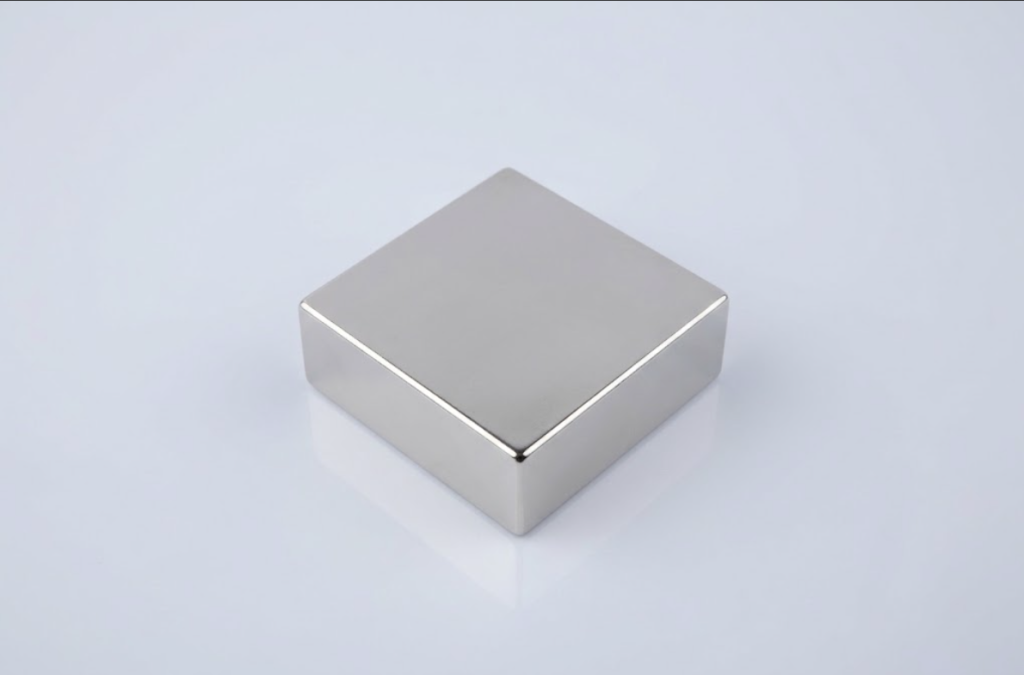
Block Magnet
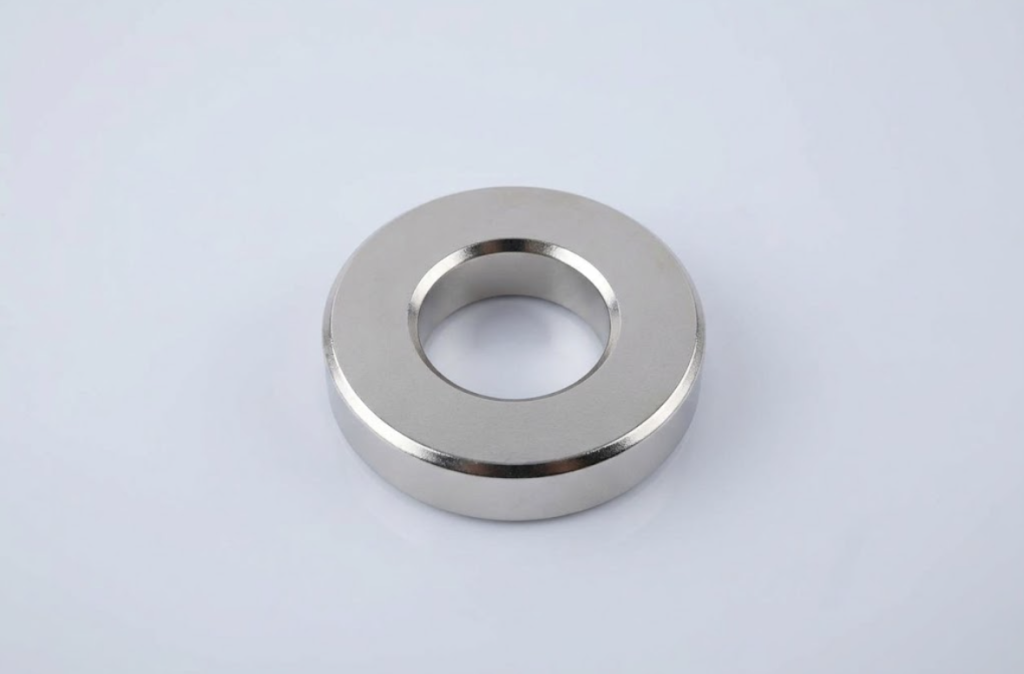
Ring Magnet
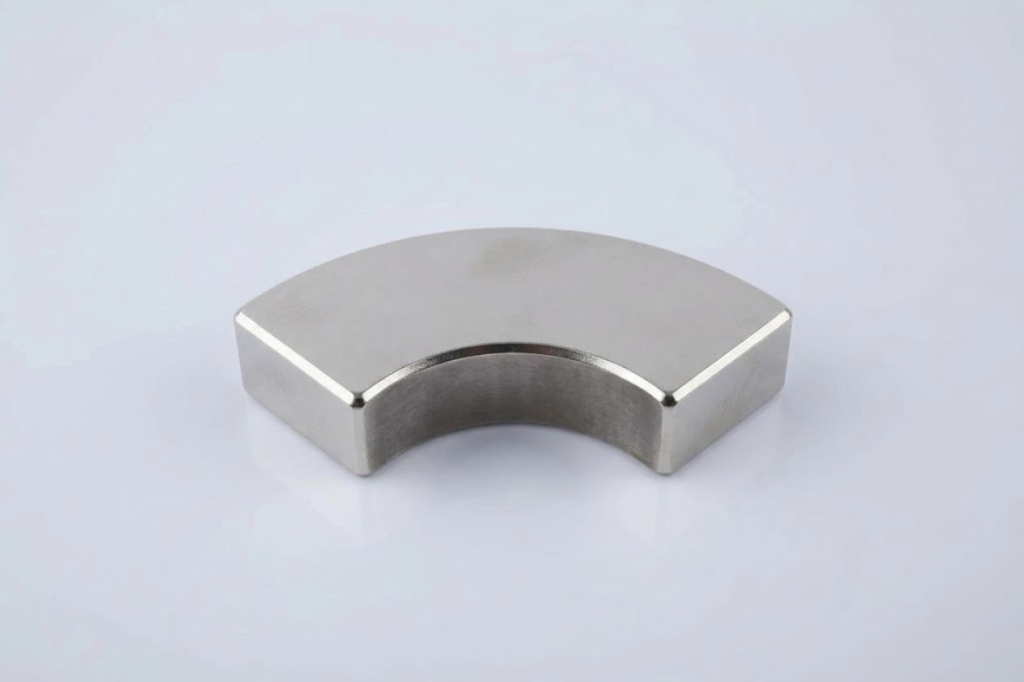
Arc Magnet
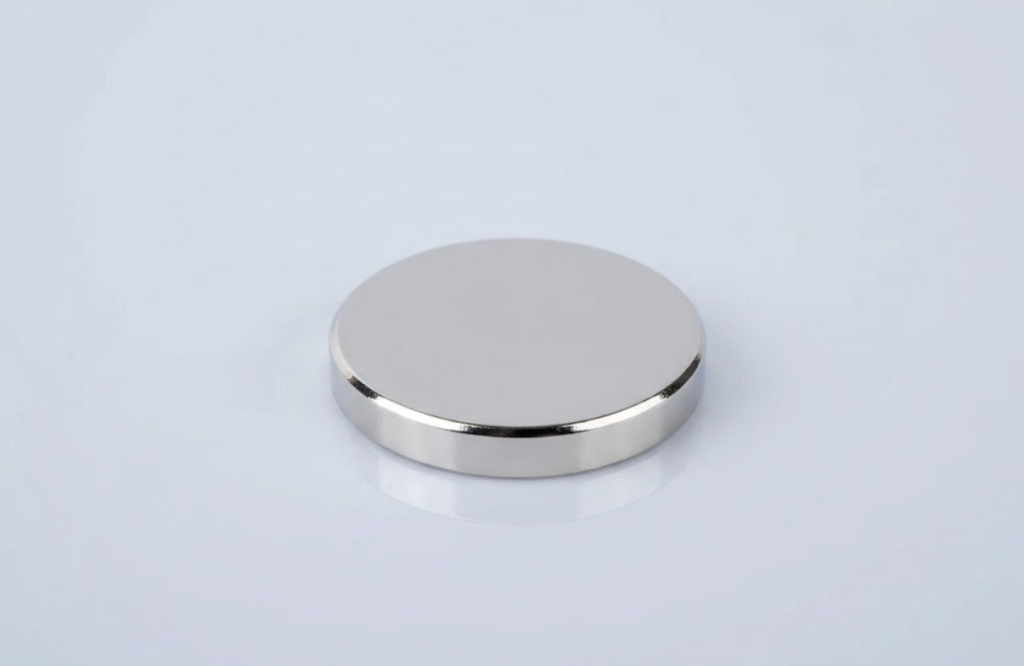
Disc Magnet
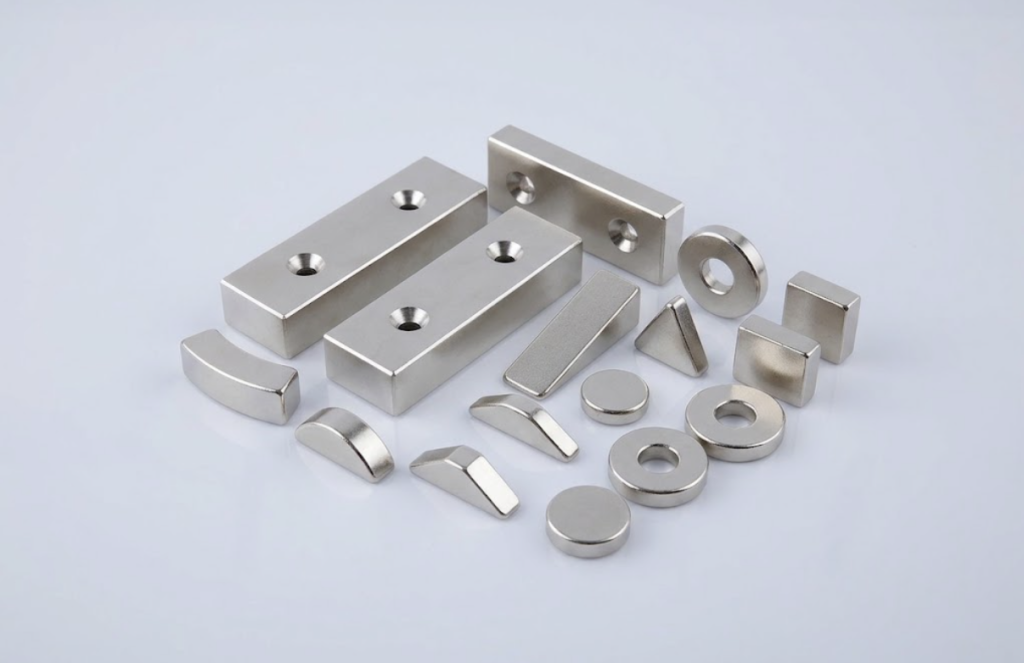
Special Shaped Magnet
Chosen your shape?
Surface Coatings & Plating Options for NdFeB Magnets
Select the Right Protective Coating for Your Operating Environment
Since sintered neodymium magnets are susceptible to corrosion, choosing the right surface protection is essential. We offer various plating solutions, including Nickel-Copper-Nickel (Ni-Cu-Ni), Epoxy, Zinc, Parylene, and Gold, to enhance salt spray resistance, chemical durability, and moisture protection.
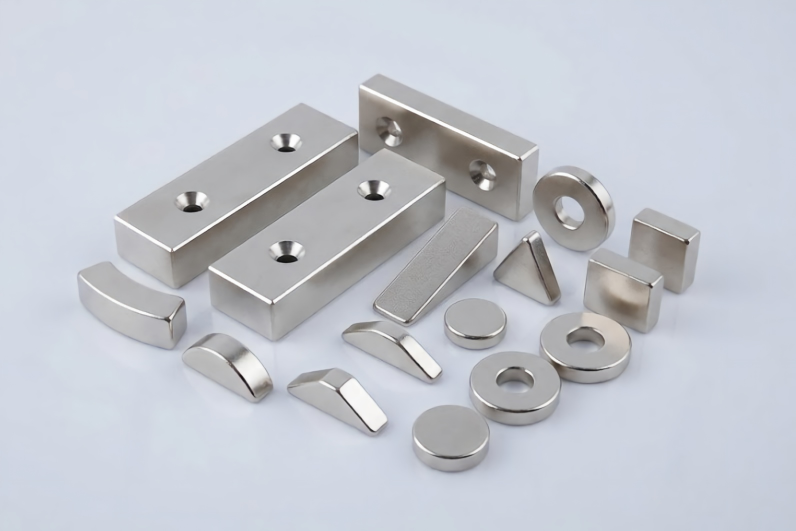
Nickel-Copper-Nickel
Classic triple-layer metallic plating with high mechanical strength.
Bright shiny silver appearance with great everyday corrosion protection.
Standard cost-effective solution for general industrial applications.
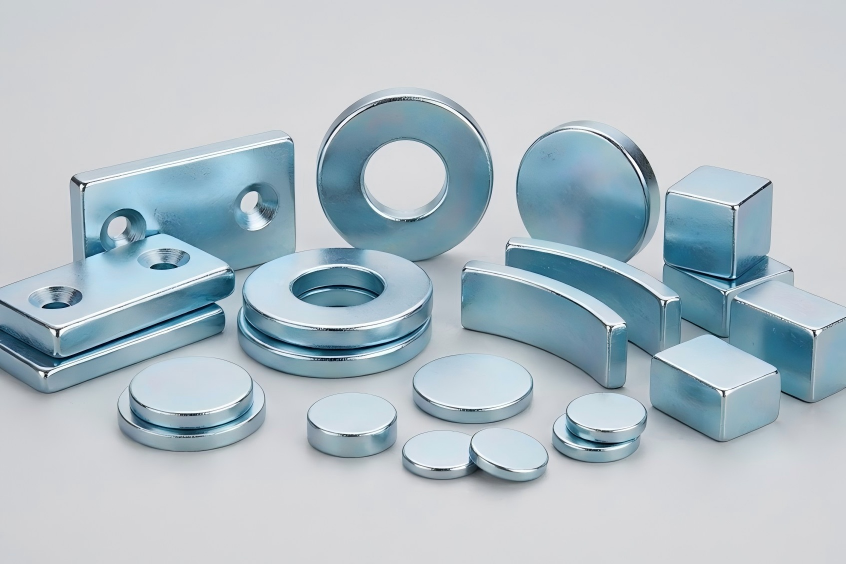
Blue-White Zinc
Budget-friendly surface treatment featuring a subtle light-blue sheen.
Adequate oxidation resistance for dry indoor working environments.
Highly economical option for cost-sensitive commercial magnetic parts.
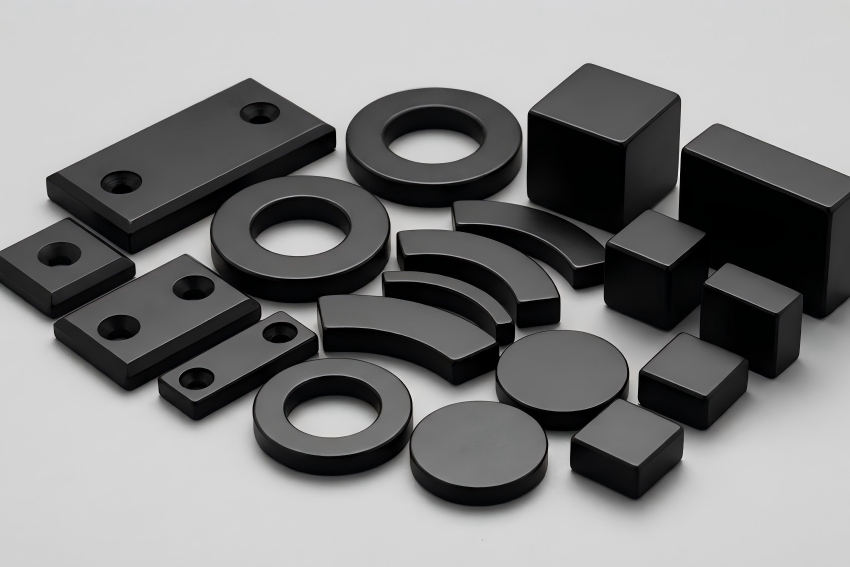
Black Epoxy
Premium matte black finish with exceptional salt spray resistance.
Superior protection against humidity, moisture, and chemical exposure.
Excellent electrical insulation suitable for harsh outdoor equipment.
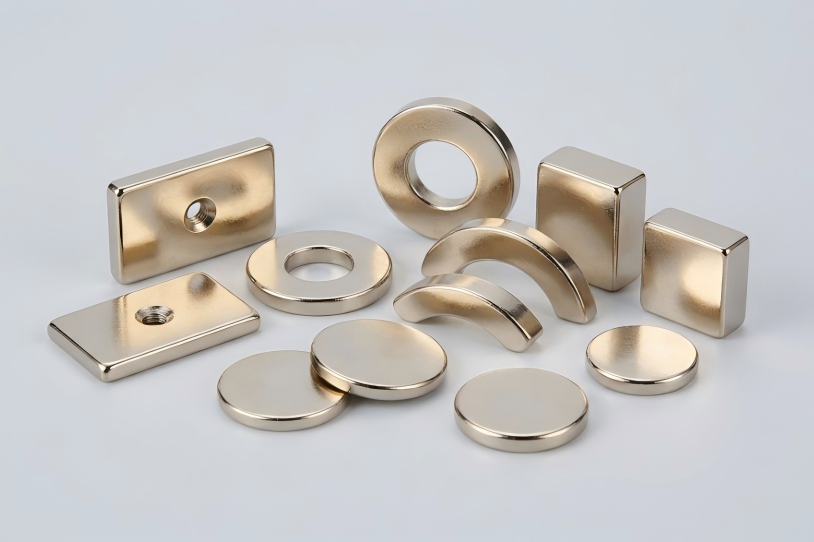
Parylene
Ultra-thin pinhole-free polymer coating deposited via CVD process.
Outstanding acid, alkali, and chemical resistance for precise parts.
Biocompatible material ideal for medical devices and sensors.
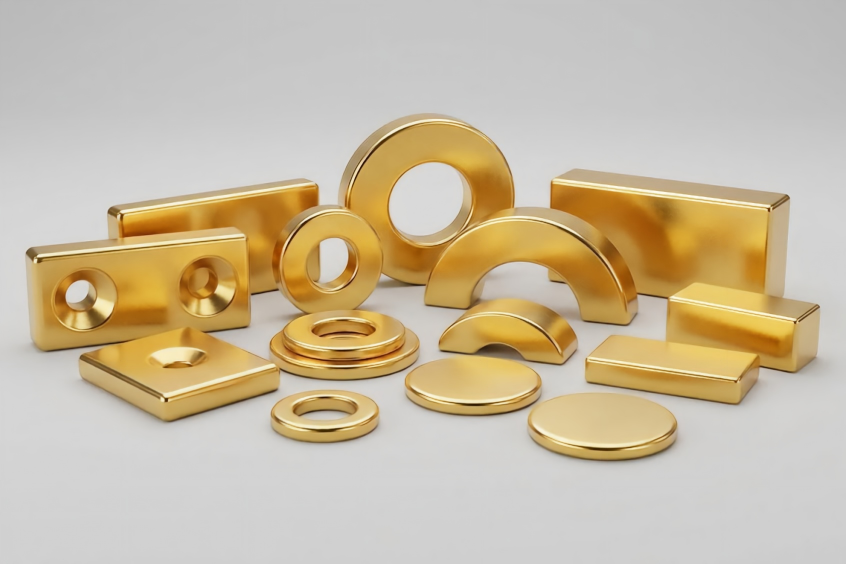
Gold
Premium 24K gold layer over a durable Ni-Cu-Ni base coating.
Luxurious decorative appearance with long-lasting oxidation barrier.
Safe biocompatible solution popular in high-end medical goods.

Custom Coatings
Protect your magnets in demanding environments. Request a custom coating solution for your specific application.
Magnetization Directions by Shape & Orientation
Select Standard or Multi-Pole Magnetization Patterns for Your Geometries
Sintered NdFeB magnets are anisotropic materials that require precise magnetic field orientation during production. We offer customized magnetization patterns, including axial, radial, diametrical, and skewed multi-pole options, tailored for blocks, rings, discs, arcs, wedges, cylinders, tubes, and spheres to optimize your motor and sensor performance.
Arc Magnets
Radially Magnetized NS
Radially Magnetized SN
Segmentally Magnetized
Thickness Magnetized
Block Magnets
Thickness Magnetized
Length Magnetized
Width Magnetized
Multi-Poles Magnetized
Disc Magnets
Axially Magnetized
Diametrically Magnetized
Multi-Poles Magnetized
Wedge Magnets
Radially Magnetized NS
Radially Magnetized SN
Segmentally Magnetized
Axially Magnetized
Ring Magnets
Axially Magnetized
Diametrically Magnetized
Radially Magnetized
Multi-Poles Magnetized
Radially Multipole Magnetized
Radially Skewed Multipole
Circumferential Skewed M-P
Circumferential Multi-Pole
Cylinder Magnets
Axially Magnetized
Diametrically Magnetized
Tube Magnets
Axially Magnetized
Diametrically Magnetized
Sphere Magnets
Axially Magnetized
Need a Custom Magnetization Pattern or Engineering Assistance?
Unsure which magnetization direction or pole count best fits your rotor or sensor assembly? Our magnetic design engineers offer finite element analysis (FEA), custom fixture design, and prototyping support to ensure optimal magnetic flux distribution for your project.
Frequently Asked Questions About Sintered NdFeB Magnets
Technical & Purchasing Insights for Engineers and Procurement
Q1: What is the maximum operating temperature for sintered NdFeB magnets?
The maximum operating temperature for sintered NdFeB magnets depends on the specific magnet grade. Standard N-series magnets can operate up to 80°C. High-temperature grades, such as M (100°C), H (120°C), SH (150°C), UH (180°C), EH (200°C), and AH series (up to 220°C), are engineered with higher intrinsic coercivity (Hcj) to withstand severe thermal demagnetization in high-temperature motors and sensors.
Q2: What is the difference between sintered NdFeB and bonded NdFeB magnets?
Sintered NdFeB magnets are manufactured through a powder metallurgy vacuum sintering process, offering the highest magnetic energy product (BHmax from 35 MGOe to 54 MGOe) and maximum pull force. Bonded NdFeB magnets are made by mixing magnetic powder with plastic resins via injection or compression molding. While bonded magnets have lower magnetic strength, they allow for intricate shapes, multi-pole magnetization, and tighter as-molded tolerances without extra machining.
Q3: Why do sintered neodymium magnets require surface coatings?
Sintered neodymium magnets contain high amounts of iron and rare earth elements, making them highly susceptible to surface oxidation and corrosion in humid environments. Applying a protective surface plating—such as Ni-Cu-Ni (Triple Layer Nickel), Black Epoxy, Zinc, or Parylene—prevents chemical degradation, improves salt spray resistance, and extends the operational lifespan of the magnet.
Q4: What dimensional tolerances can be achieved for custom sintered NdFeB magnets?
Standard machining processes (such as wire EDM and surface grinding) yield dimensional tolerances of +/-0.03mm. For high-precision applications, such as high-speed motor rotors and optical sensors, precision diamond grinding can achieve tight tolerances down to +/-0.01mm or +/-0.02mm upon engineering request.
Q5: Can sintered NdFeB magnets be machined after magnetization?
No, sintered NdFeB magnets should always be machined, cut, and ground prior to magnetization. Sintered neodymium is extremely hard and brittle; machining magnetized material creates intense magnetic debris that clogs tools, increases the risk of micro-cracking, and poses thermal demagnetization risks due to friction heat generated during grinding.
Q6: How do I select the right magnetization direction for my application?
Sintered NdFeB magnets are anisotropic, meaning they possess a preferred magnetic orientation determined during the pressing process. Depending on your magnetic circuit design, options include axial magnetization (through the thickness/height), radial magnetization (through the diameter/wall), segment/skewed magnetization for arc motor magnets, and multi-pole surface magnetization for encoders and actuators.
Q7: What factor causes permanent loss of magnetism in NdFeB magnets?
Demagnetization in sintered NdFeB magnets is primarily triggered by three factors: exceeding the maximum operating temperature (Curie temperature), exposure to strong opposing external magnetic fields, and severe structural corrosion. Selecting a grade with adequate intrinsic coercivity (Hcj) and applying proper surface plating prevents permanent loss of magnetic performance.
Q8: What technical parameters are required to get an accurate custom magnet quote?
To provide an accurate factory-direct quote, our engineering team requires:
Dimensions & Shape (or technical 2D/3D drawings in .STEP/.PDF format)
Magnet Grade (e.g., N42, 45SH, 38UH) or working temperature requirements
Surface Plating (e.g., Ni-Cu-Ni, Epoxy, Zinc)
Magnetization Direction (e.g., Axial, Radial, Diametrical)
Estimated Order Quantity (for prototyping or mass production)
Didn't Find the Answer You Were Looking For?
Have custom magnet specifications, complex thermal stability questions, or unique magnetic circuit designs? Contact our technical support team directly to receive personalized engineering advice and a fast response within 24 hours. Our Magnetic Application Engineers Are Here to Help!
Thank you!
Your request has been sent. One of our magnet engineers will reply to your email within 24 hours.